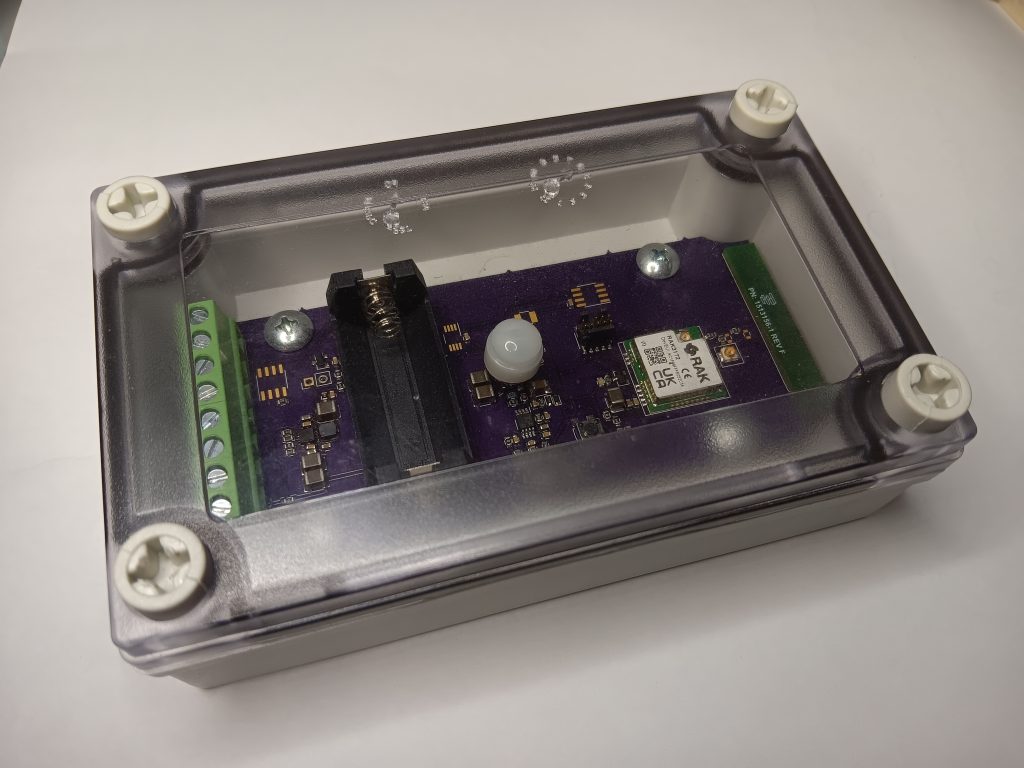
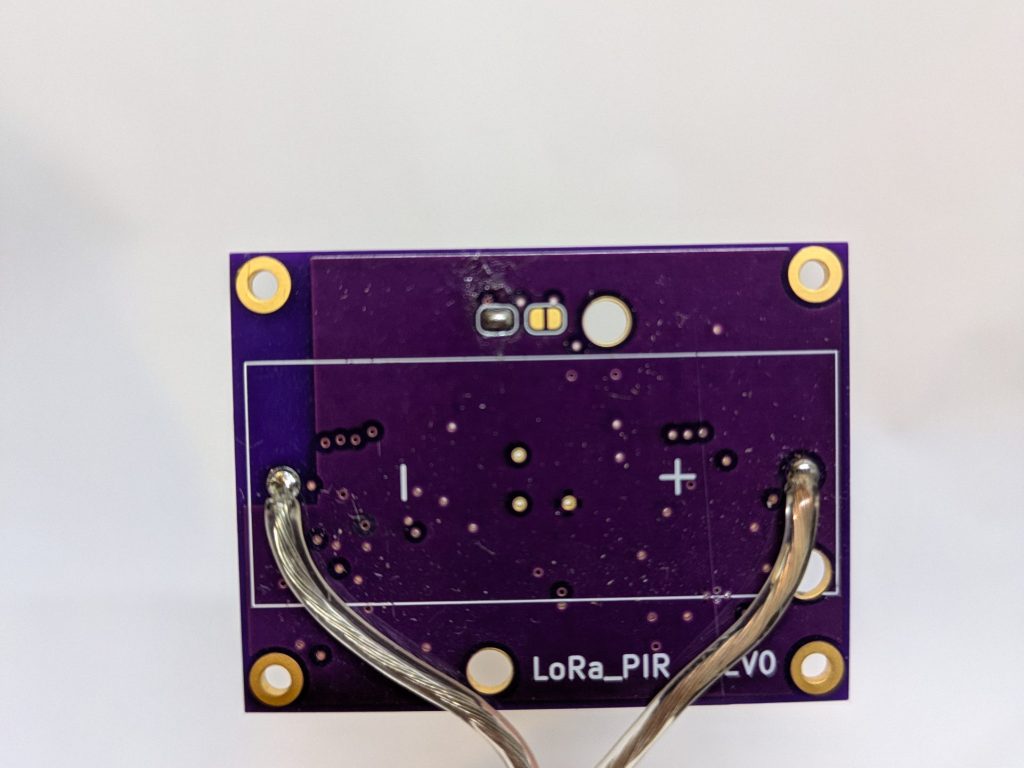
For this project, I created an extremely low power LoRa enabled PIR motion detector that could last years on a single CR123A battery. I used TI’s TIDA-01398 reference design as a starting point for the PIR analog processing circuit, and added a STM32 based LoRa module.
What I learned
This project was an opportunity to experiment with RAK Wireless’s RAK3172 Module, Antenna Tuning using a Pi network, and to evaluate TI’s TPS63900 extremely low quiescent current buck-boost converter. I also got to play around with an analog circuit balancing frequency response with power consumption.
I have since used the TPS63900 in other projects, as well as Pi-network tuning.
I’d like to revisit this project but instead of using a project box, I’d like to experiment with reducing it’s size by potting an enclosure around the board using silicone molds and a compatible casting resin. There’s plenty of space to shrink the circuit, the main limitation is RF performance and bandwidth is reduced as the counterpoise ground plane shrinks.
As is, the project box requires the PIR sensor be mounted outside the enclosure, or a hole be cut in the lid to allow the IR light to reach the sensor. An HDPE or Silica window could also be used.
A BLE Variation
I did create a slight variation that was a smaller form factor to evaluate Fanstel’s LR62E LoRa module as well as their extremely low cost BC805M BLE module based on Nordic’s nRF52805 series.
After ST released the STM32WL family, 3rd party manufacturers are making pre-certified modules that are cheaper and more capable than the LR62E.
I did like the BC805M, although at the time I evaluated the module Nordic was in the middle of the transition from their SDK to pushing Zephyr. The process for getting Zephyr working correctly was still far from polished.